
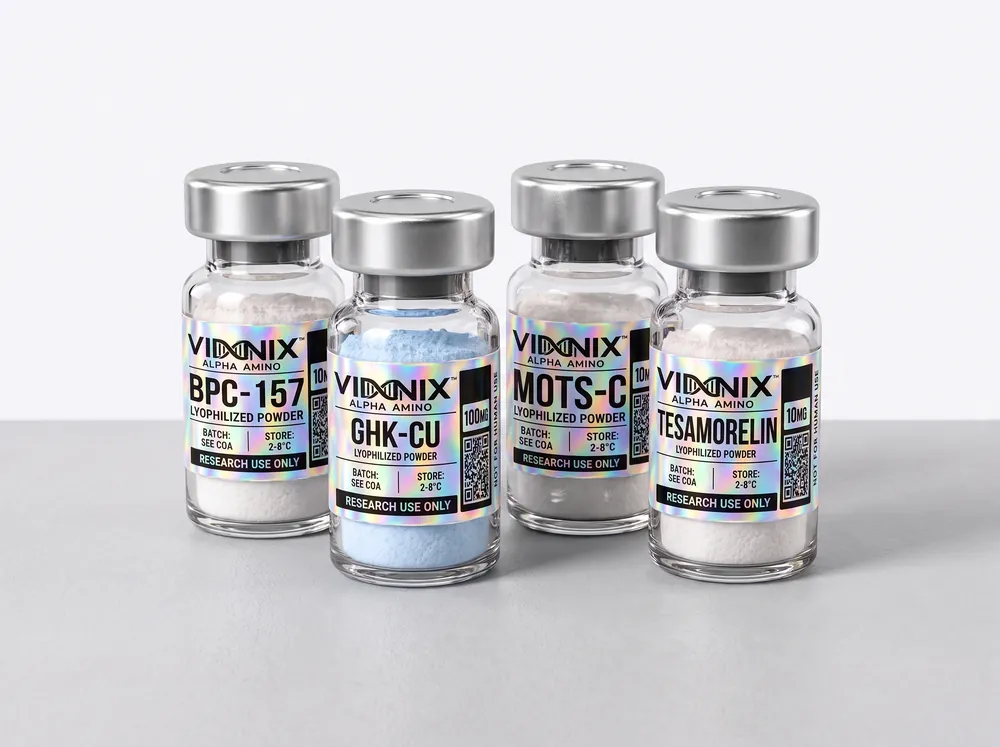
Vinnix research products
Compound reference library
Identity and molecular information for related compounds that Vinnix does not sell individually.
Selank
Where the Selank sequence comes from, how it relates to the natural peptide tuftsin, the registry data that…
Semax
The Semax sequence, how it was built from a fragment of adrenocorticotropic hormone, the registry data that…
TB-500
What TB-500 means, how it relates to thymosin beta-4 and the LKKTETQ fragment, and why you have to confirm…
CJC-1295
What CJC-1295 is, how the DAC and no-DAC versions differ, its verified identifiers and how analysts tell the…
Ipamorelin
Ipamorelin is a synthetic pentapeptide that Novo Nordisk scientists first described in 1998. This entry…
Sermorelin
A reference profile of sermorelin, the 29-residue amidated fragment of human GHRH, covering its sequence…
KPV
KPV is the tripeptide Lys-Pro-Val, the last three residues of alpha-MSH. Here you'll find its structure…
SS-31
A reference profile of elamipretide, a small synthetic aromatic-cationic tetrapeptide, with its modified…
PT-141
Reference profile of bremelanotide, a synthetic cyclic heptapeptide in the melanocortin family: structure…
Explore Peptide Compounds
The Vinnix peptide catalog treats each research peptide as its own compound, with its own specifications and its own documentation. That's deliberate. Peptides are molecules made of amino acids linked by peptide bonds, and individual peptides differ in sequence, chain length, structure and chemical behavior.
So instead of one category of interchangeable products, you get a dedicated page per compound, built around its identity. A listing tells you what the material is, how much is supplied, which batch it came from and which reports describe that batch. The background science lives in the Research Library, which keeps product pages focused on facts you can check.
Each compound profile is designed to give clear, structured information about the named substance: verified identifiers, molecular characteristics and links to related research resources.
Research Peptides for Sale: The Current Catalog
Here are the research peptides currently offered, single compounds first, then blends. Strength and SKU come from the Vinnix product list. Batch numbers, storage details and the amount of each compound in a blend are added to the product page once they're verified. We don't publish estimates in the meantime. General handling background is in peptide storage.
| Compound | SKU | Residues | Type |
|---|---|---|---|
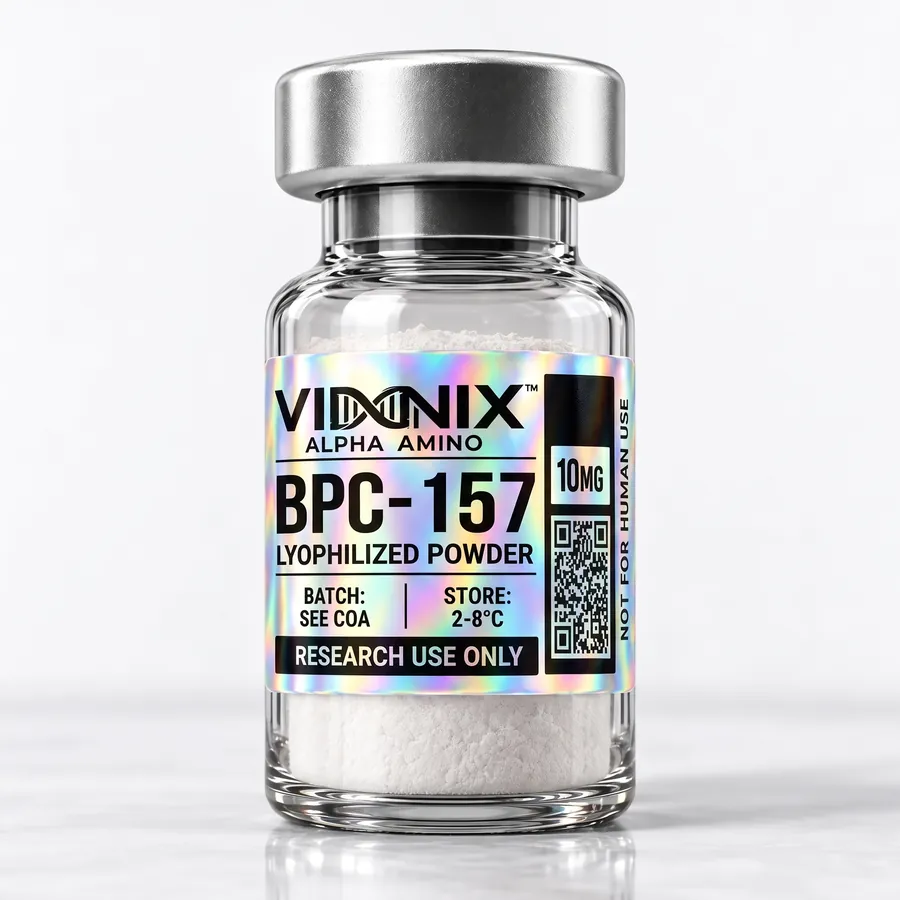
| BPC-157 | BC10 (10 mg), BC20 (20 mg) | 15 | Synthetic pentadecapeptide |
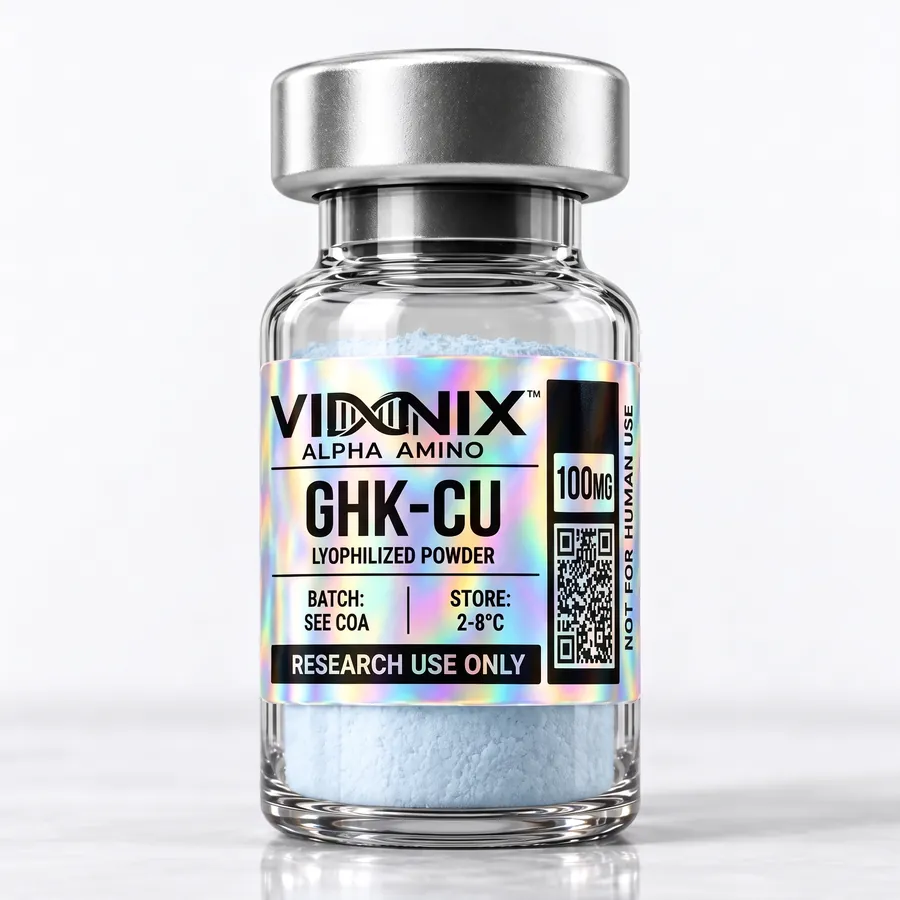
| GHK-Cu | CU100 (100 mg) | 3 | Copper complex of the tripeptide Gly-His-Lys |
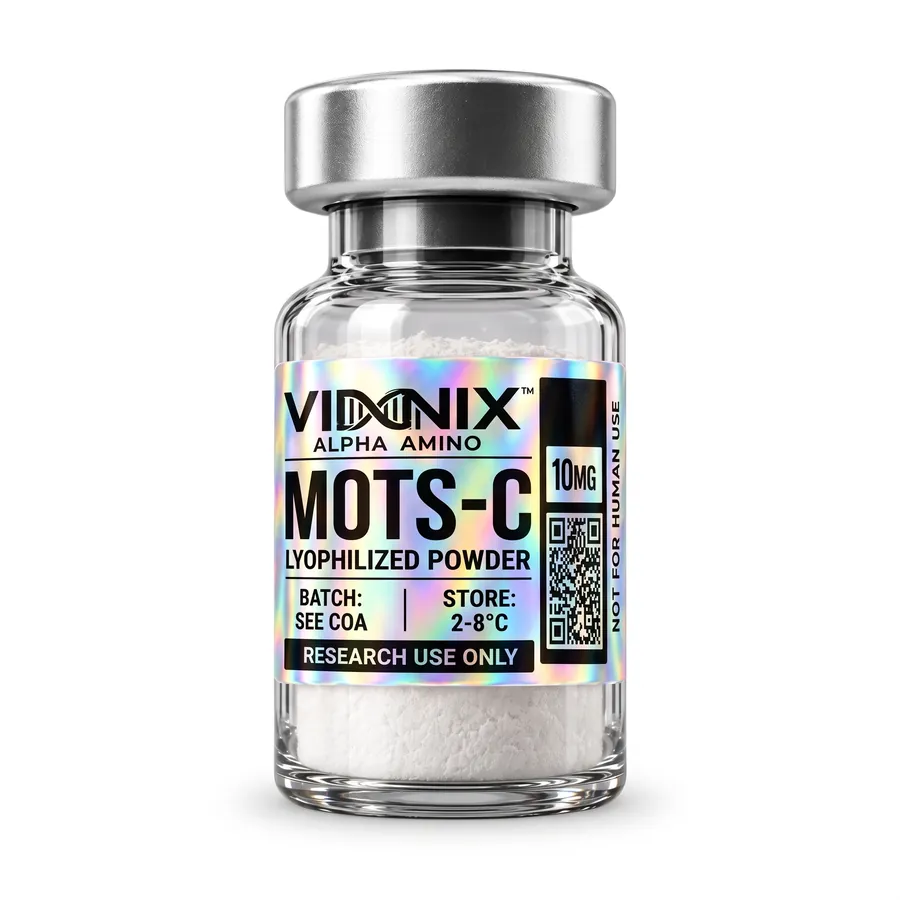
| MOTS-c | MS10 (10 mg) | 16 | Mitochondrial-derived peptide |
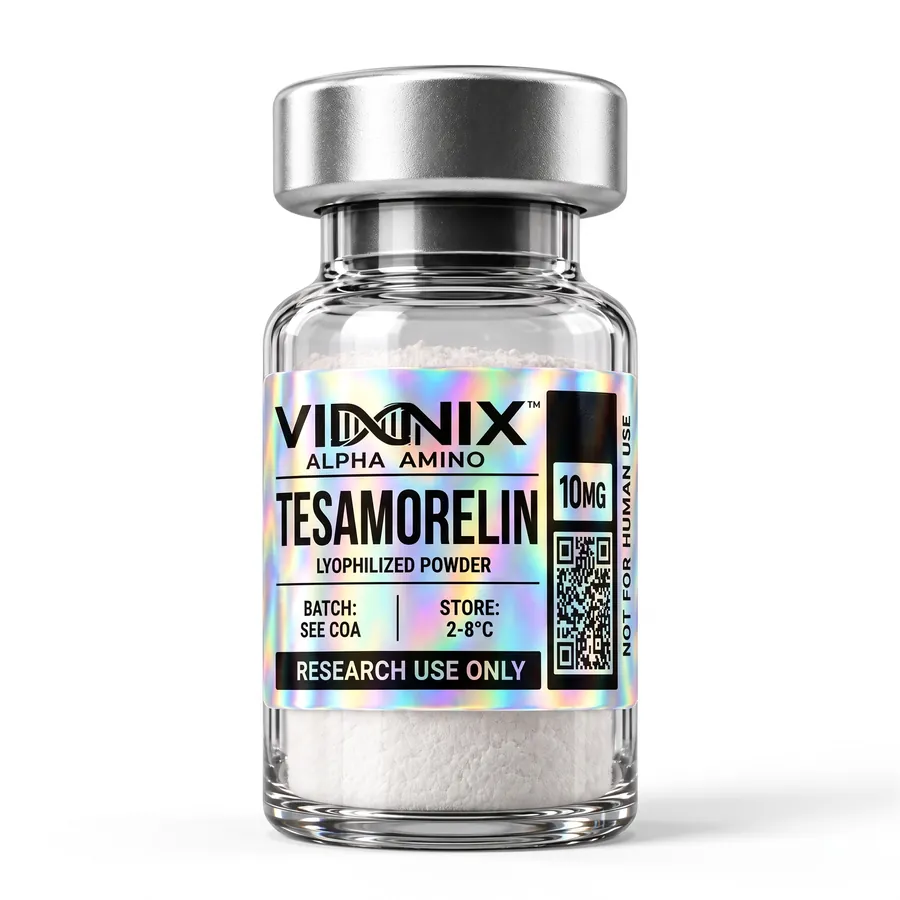
| Tesamorelin | TSM10 (10 mg) | 44 | Modified GHRH (1-44) analogue |
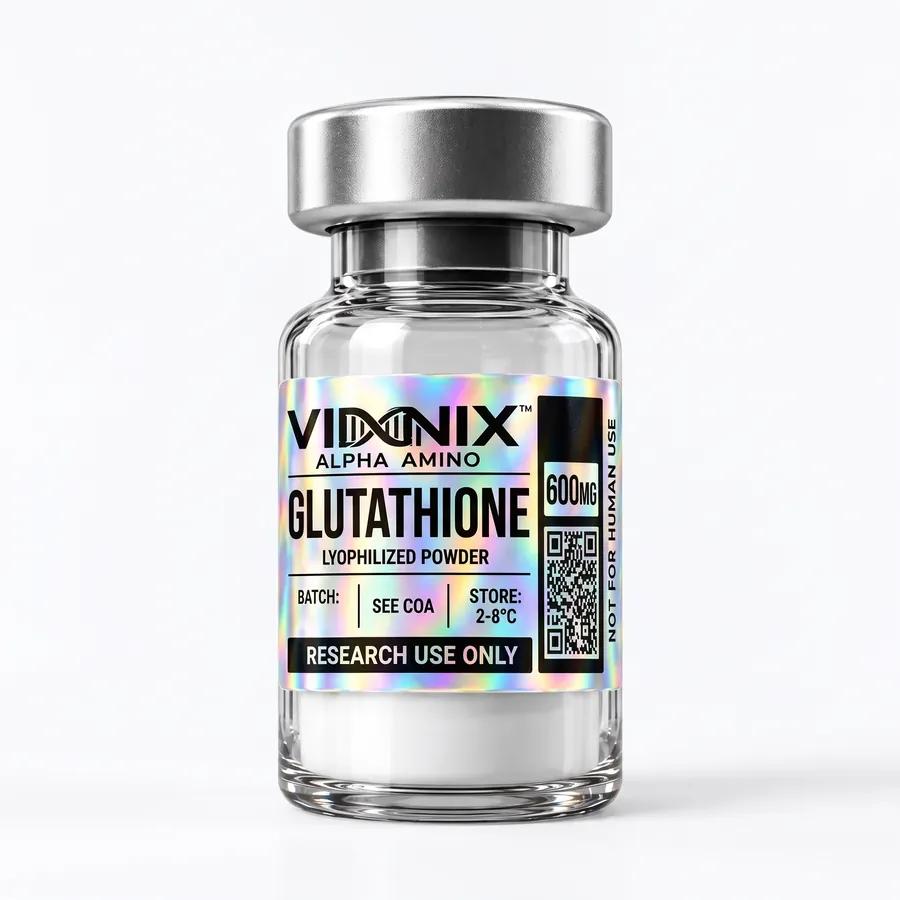
| Glutathione | GT600 (600 mg) | 3 | Tripeptide (gamma-Glu-Cys-Gly) |
| Blend | SKU | Components |
|---|---|---|
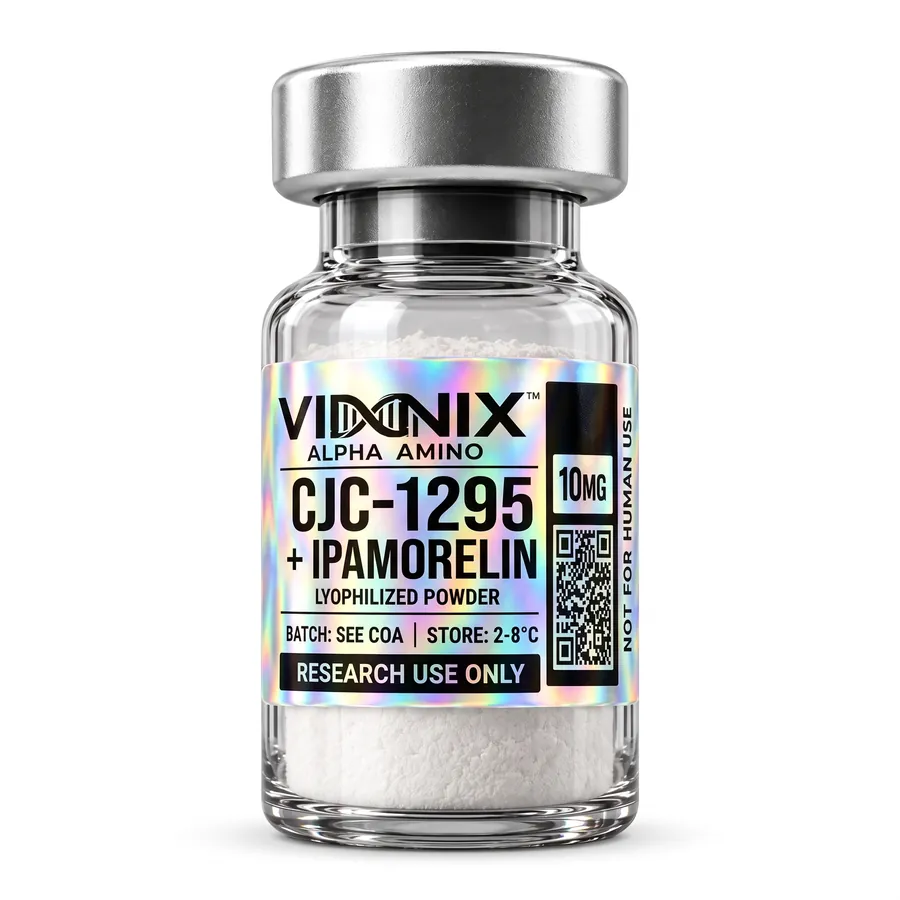
| CJC-1295 + Ipamorelin | CP10 (10 mg) | CJC-1295, Ipamorelin |
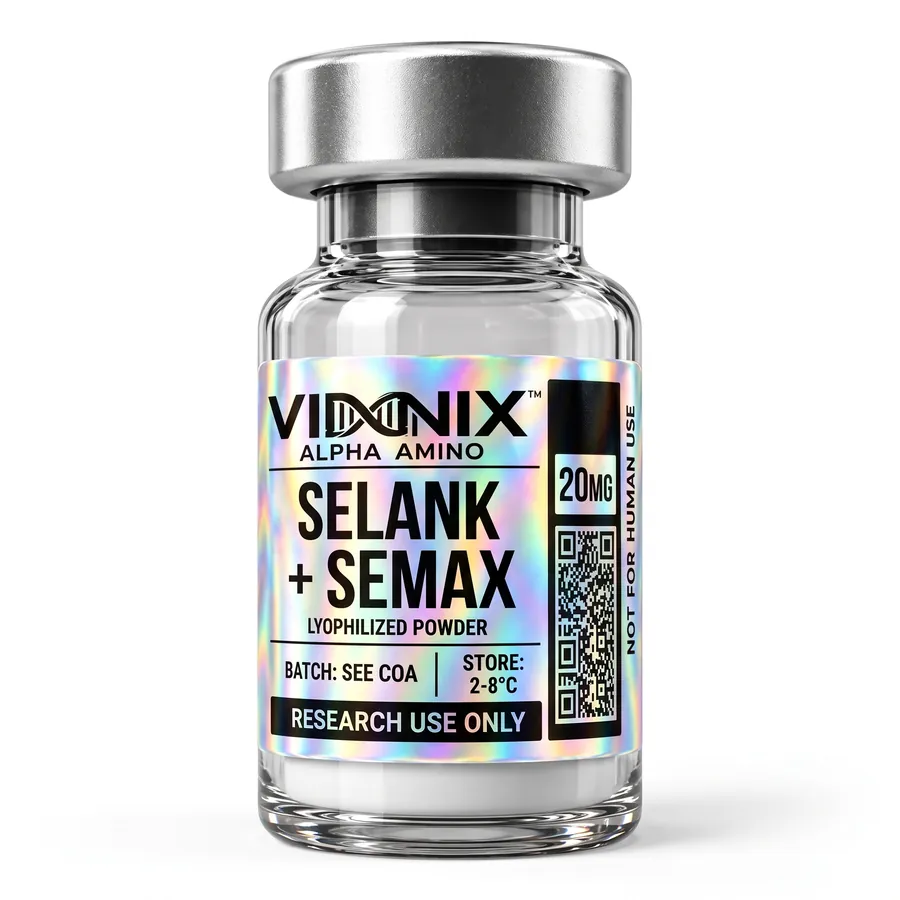
| Selank + Semax | XS20 (20 mg) | Selank, Semax |
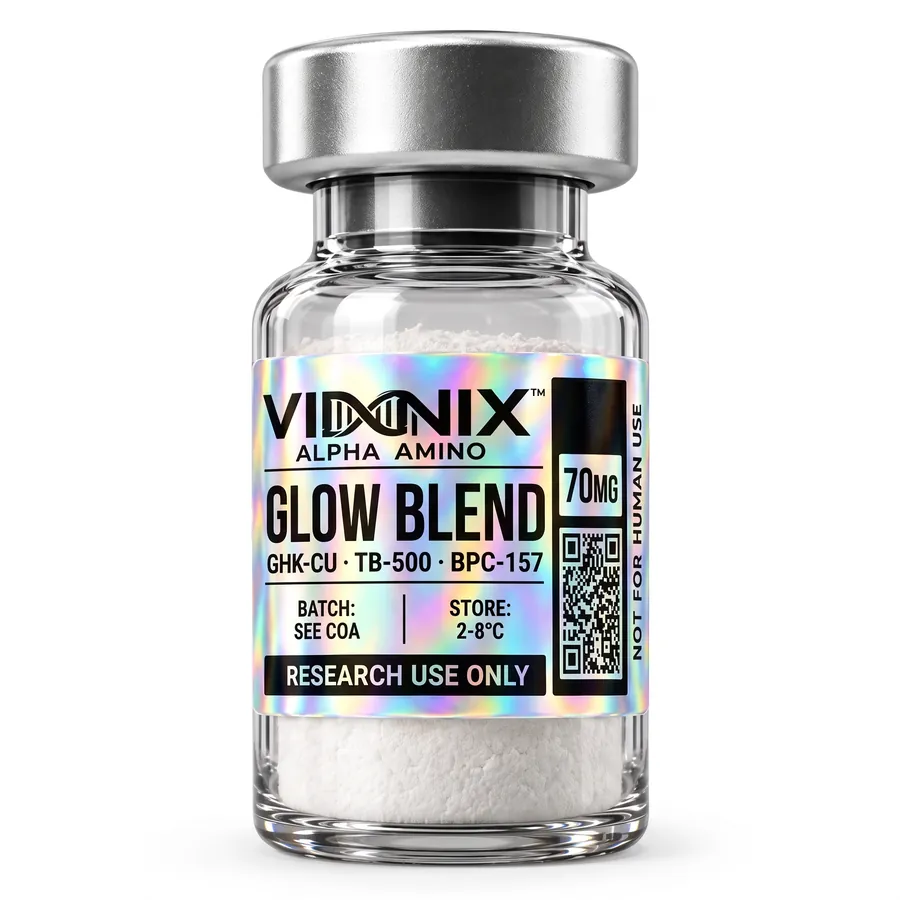
| GLOW Blend | BBG70 (70 mg) | GHK-Cu, TB-500, BPC-157 |
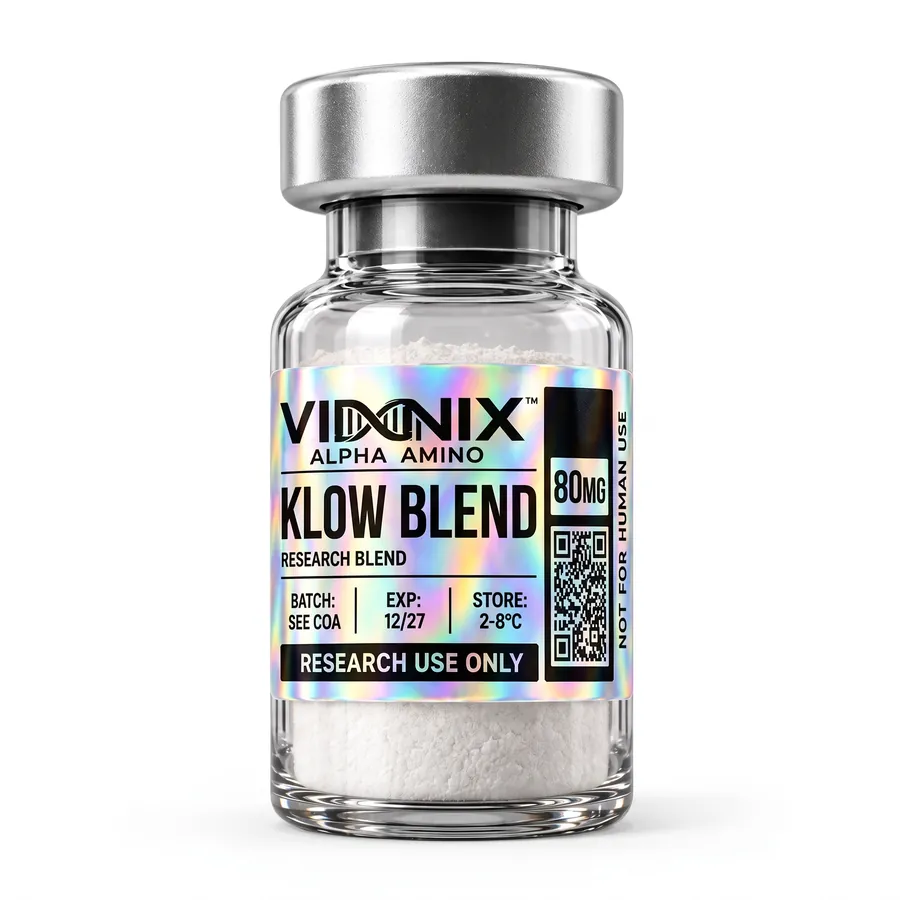
| KLOW Research Blend | KLOW80 (80 mg) | GHK-Cu, TB-500, BPC-157, KPV (exact composition listed on the batch COA when published) |
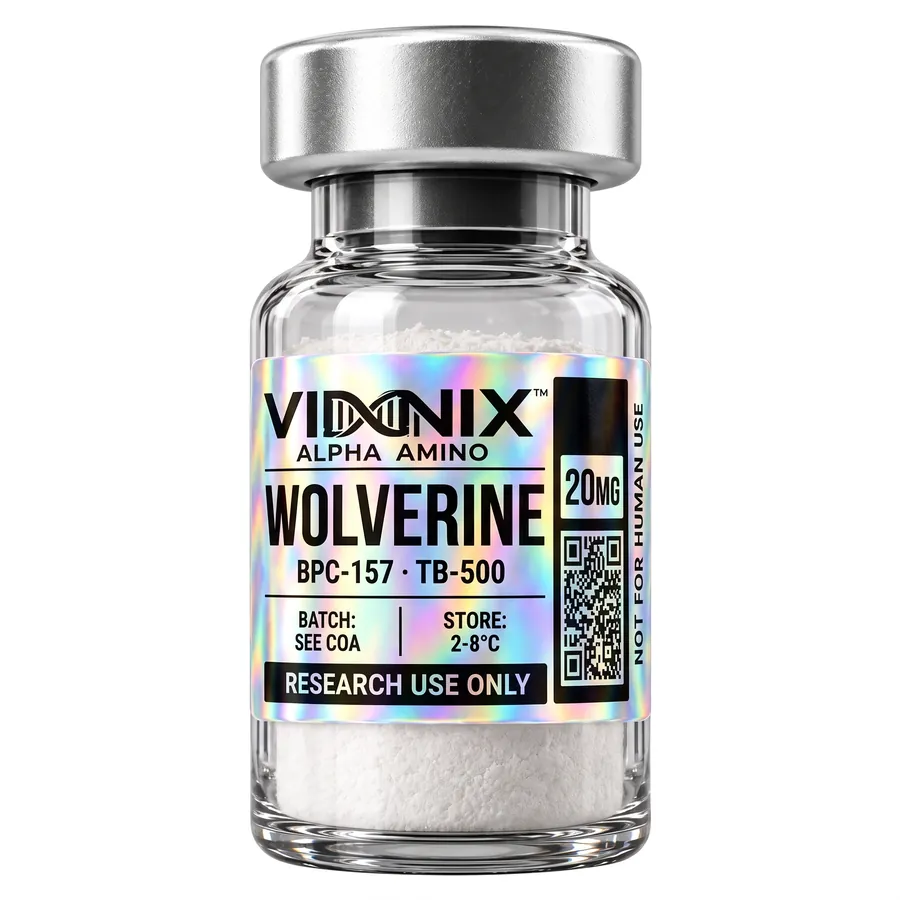
| Wolverine Blend | BB20 (20 mg) | BPC-157, TB-500 |
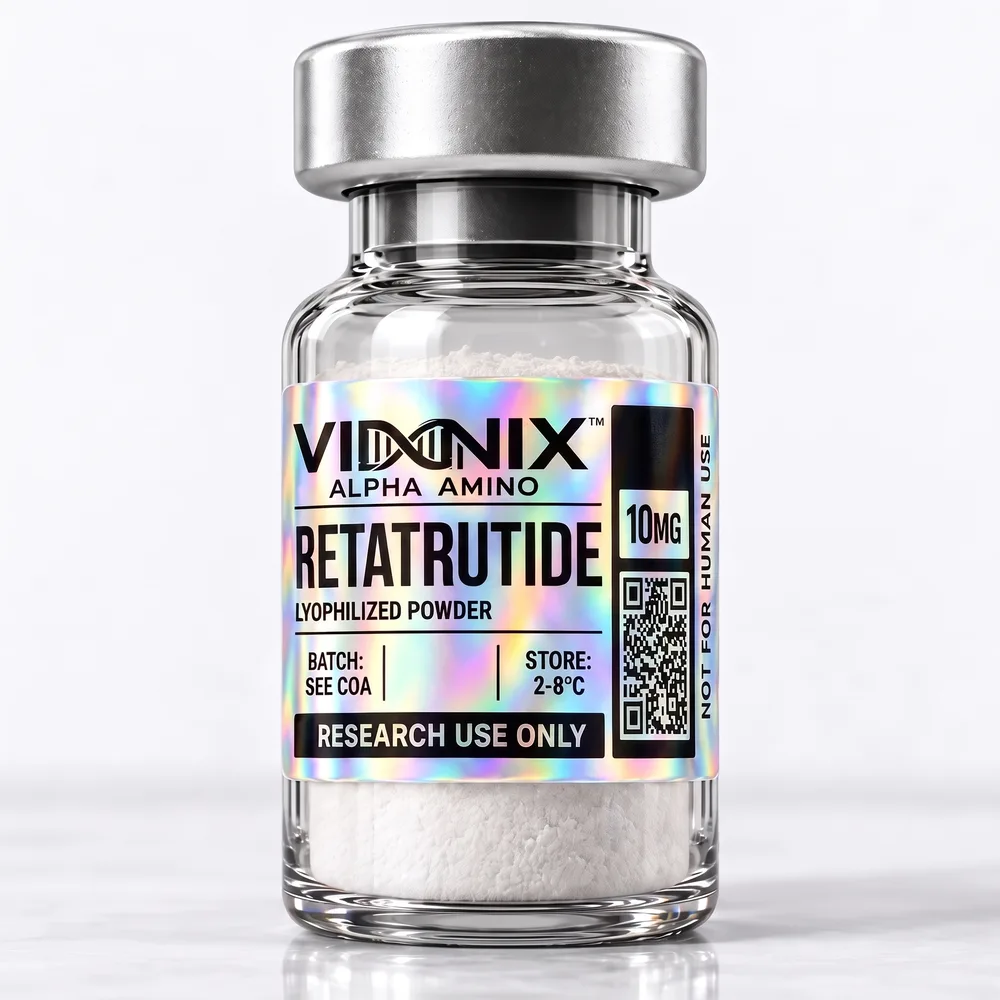
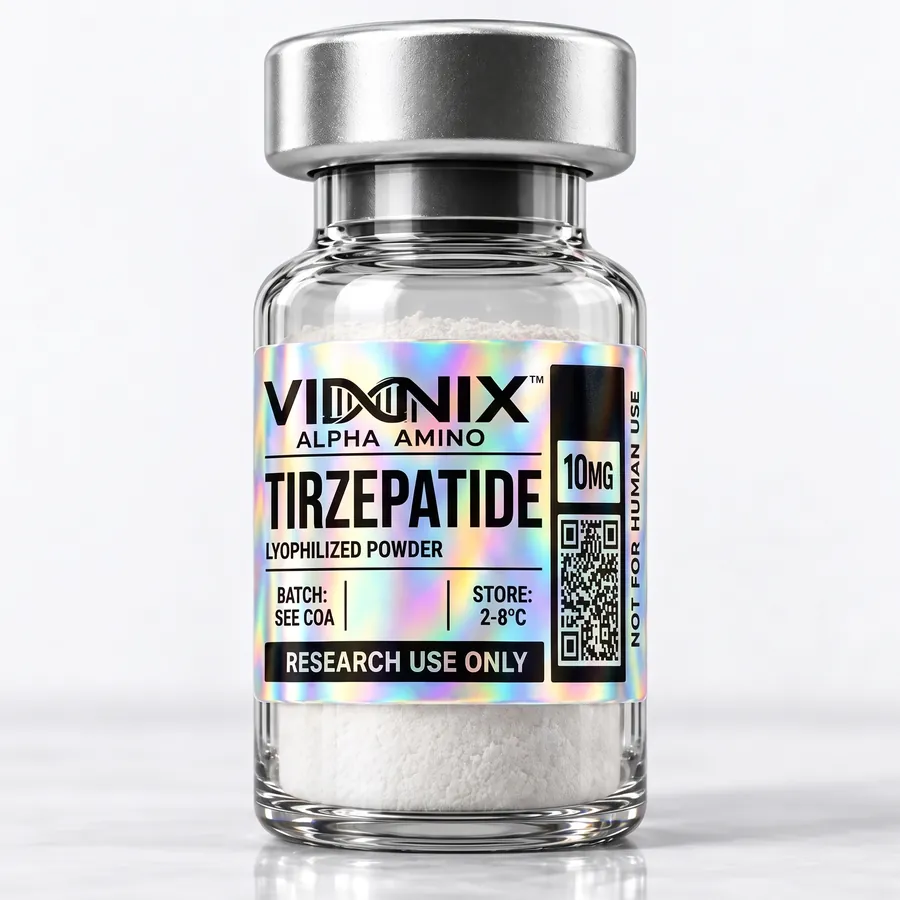
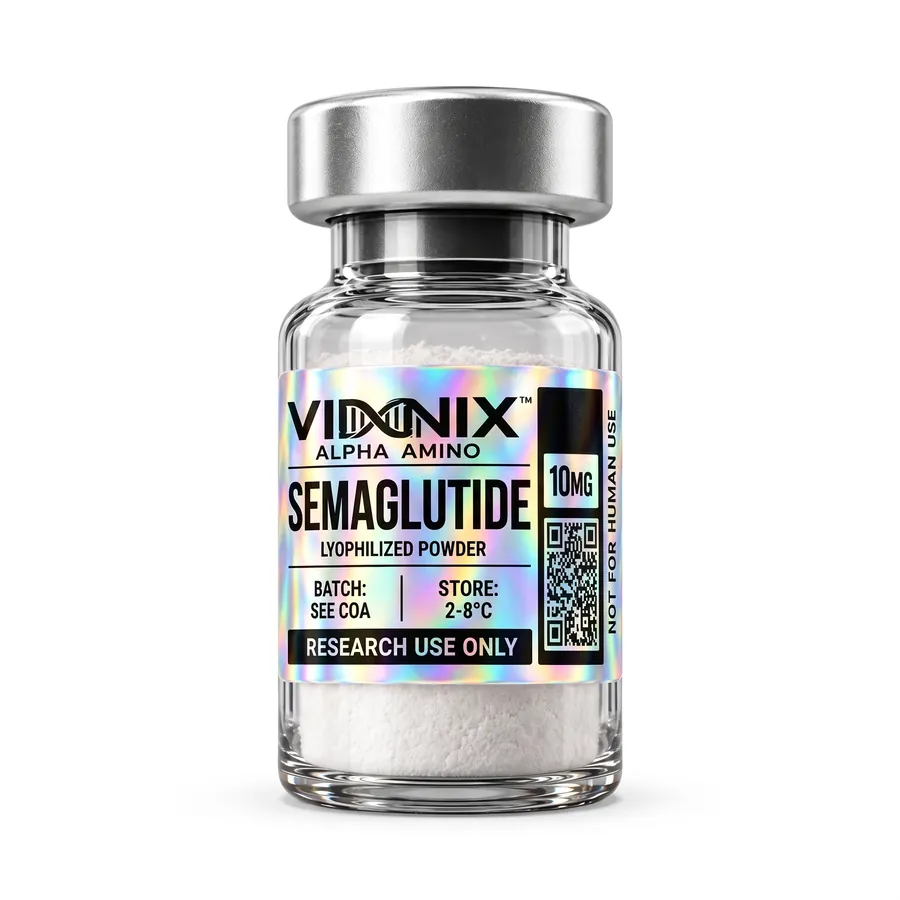
Three incretin-class research peptides, retatrutide, tirzepatide and semaglutide, have their own information pages with regulatory background. For the full A to Z list, including compounds that only appear inside blends, go to the Compound Library.
What Are Peptides?
A peptide is a chain of amino acids joined by peptide bonds. The order of those amino acids, the sequence, decides which peptide it is. Change one residue, or swap two positions, and you've got a different molecule with a different mass and different chemistry.
Sizes vary a lot, from two residues to several dozen. In this catalog, glutathione and GHK-Cu are tripeptides, BPC-157 has 15 residues and tesamorelin has 44. Many research peptides are synthetic analogues of fragments of larger natural proteins or hormones [1]. Some add non-standard residues, a capped C-terminus or an attached chemical group, and those modifications are part of the identity, so they show up in the specifications.
"Peptide" covers so many different molecules that a finding reported for one tells you nothing about another. That's the main reason each compound gets its own page. For a longer introduction, read understanding peptide research, what are peptides and peptides vs proteins.
Peptides and Amino Acids
Amino acids are the units peptide chains are built from, so they're the first thing to understand when you read a peptide specification. Each one has an amino group, a carboxyl group and a side chain. When the carboxyl group of one amino acid joins the amino group of the next, a molecule of water is released and a peptide bond forms.
Biology encodes twenty amino acids. Synthetic research peptides can go beyond that, with D-amino acids or modified residues such as aminoisobutyric acid (Aib); ipamorelin, for example, contains Aib and two D-configured residues. More on the amino acids page and in the article on peptide bonds.
Understanding Peptide Sequences
A peptide sequence lists a chain's amino acids in order from the N-terminus to the C-terminus. On a research peptide listing, it's the single most useful identifier. You'll see it in one-letter code, such as GEPPPGKPADDAGLV for BPC-157, or in three-letter code, such as Gly-Glu-Pro.
Vinnix compound pages show the sequence next to the molecular formula, molecular weight and CAS number, each checked against PubChem [2]. Some names can point to more than one sequence. TB-500 is the obvious case, and its profile says so and explains what a product record needs to state. Notation is covered in detail in the peptide sequences guide.
Peptide Testing & Analysis
Peptide testing uses different methods for different questions: mainly, is this the expected molecule, and how much of the sample is that molecule? HPLC separates a sample's components by chromatography. Mass spectrometry analyzes ions by mass-to-charge ratio. They give you different information, and one can't stand in for the other.
| Question | Typical method | What appears on the report |
|---|---|---|
| Is it the right molecule? | Mass spectrometry or LC-MS | Observed mass compared with expected mass |
| How much of the sample is that molecule? | HPLC with UV detection | Chromatogram and main-peak area percentage |
| Which batch was tested? | Sample identification | Batch or lot number, test date, laboratory |
A purity figure alone doesn't confirm identity, and an identity result doesn't tell you purity. Read both, then check that the batch on the report matches the batch on your product. The peptide testing guide explains each method, and HPLC vs mass spectrometry puts them side by side.
How to Evaluate Research Peptides Before You Order
Comparing peptides for sale across suppliers? Judge each listing by the information it gives you, not the language wrapped around it. Below is the checklist Vinnix holds its own pages to, and our guide to sourcing research peptides goes further.
- Product identity. The listing should name the compound clearly and, where possible, give its sequence or another identifying specification. If the name is ambiguous, you can't evaluate the product.
- Quantity and specifications. The amount of material and the SKU should be stated plainly, not buried in marketing copy.
- Batch identification. A batch or lot number is what links the physical product to the paperwork that's meant to describe it.
- Analytical documentation. Look for the method used, sample identification, testing laboratory, date and reported values.
- What the test shows. HPLC and mass spectrometry answer different questions. One number rarely tells the whole story.
- Disclosures. A research product should state its intended use plainly, on the listing itself.
- Marketing is not evidence. Published research belongs in the primary literature, labeled by study type. Product copy can't replace it.
Vinnix research peptides are not intended for human or veterinary use, diagnosis or any clinical application. Product pages describe the compound and what published studies investigated, never how to use it. See the product and research disclosure.
Batch Documentation for Research Peptide Listings
Different analytical methods tell you different things about a sample. Chromatographic methods help characterize the components of a mixture, while mass spectrometry gives information relevant to molecular identification. Where available, Vinnix documentation is linked to the corresponding product or batch.
Each Vinnix research peptide will link to its batch documentation, on the product page or in the COA Library, as each report is published, so you can check what was tested before you order and after.
A certificate of analysis belongs to one batch. A useful one names the product and batch, the laboratory, the test date, the methods (usually HPLC for purity and mass spectrometry for identity) and the reported values. When a new batch's report isn't published yet, the product page says so plainly. It won't recycle an older report.
Start with what a certificate of analysis is, then work through each field with how to read a COA. As reports are released, each one goes into the Vinnix COA Library, searchable by product, SKU and batch.
Research and Educational Resources
The Vinnix Research Library covers the background behind every listing: peptide bonds, amino-acid sequences, molecular mass, chromatographic testing, certificates of analysis and the terminology used in scientific research. Good places to start are peptide bonds, the peptide sequences guide and HPLC testing.
FAQFrequently asked questions
What are peptides?
Peptides are chains of amino acids linked by peptide bonds. The sequence, the order of those amino acids, determines which peptide a molecule is. They run from two residues to several dozen and are studied across chemistry, biochemistry and pharmaceutical science. Each Vinnix research peptide gets its own page because findings about one peptide don't carry over to another.
Are the peptides for sale at Vinnix for human use?
No. Every peptide Vinnix sells is a research peptide supplied for laboratory research use only, not for human or veterinary use, diagnosis or any clinical application. Product pages cover compound identity, specifications and documentation. Where they mention published studies, they summarize what was investigated, labeled by study type, and never give instructions for use.
How are Vinnix peptides tested?
Batch reports for research peptides usually pair two methods. HPLC reports chromatographic purity, and mass spectrometry compares the observed molecular mass with the expected one to support identity. Each report names the testing laboratory, the test date and the batch. Read the two results together, and make sure the batch number on the report matches the one on your product.
Where can I find product documentation?
Each product page will link to its batch documentation, and every report will be collected in the Vinnix COA Library, searchable by product, SKU or batch number. Every record covers one batch. If a new batch's report isn't up yet, the listing says it hasn't been published. Need help? Email [email protected] with your product and batch number.
What is the difference between a single peptide and a blend?
A single-compound listing contains one peptide, like BPC-157 or MOTS-c. A blend puts two or more peptides in one product; the Wolverine Blend of BPC-157 and TB-500 is an example. Blend pages list every component with a link to its compound profile, and they show the amount of each component once Vinnix has confirmed it.
Why do some compounds have a page but no product?
Some compounds, including TB-500, CJC-1295 and Ipamorelin, are sold by Vinnix only inside a blend, and a few others are profiled purely for reference. Their Compound Library pages still give verified identity data and research background, plus links to any Vinnix product that contains them. You get the information without a standalone listing.
REFScientific references
-
Muttenthaler M, King GF, Adams DJ, Alewood PF. Trends in peptide drug discovery. Nat Rev Drug Discov. 2021;20(4):309-325. PubMed 33536635
review -
Kim S, Chen J, Cheng T, et al. PubChem 2023 update. Nucleic Acids Res. 2023;51(D1):D1373-D1380. PubMed 36305812
database