

Key facts
- BPC-157 sequence
- GEPPPGKPADDAGLV (15 residues)
- BPC-157 molecular weight
- 1419.5 g/mol (PubChem CID 9941957)
- TB-500 (as usually defined)
- Ac-LKKTETQ, thymosin beta-4 residues 17 to 23, N-acetylated
- TB-500 molecular weight
- 889.0 g/mol (PubChem CID 62707662)
- Parent proteins
- BPC from gastric juice; thymosin beta-4, 43 residues
- Evidence base
- Mostly in vitro and rodent studies; very few human reports
- WADA 2026
- BPC-157 in S0; thymosin beta-4 and derivatives, e.g. TB-500, in S2.3
What is the difference between BPC-157 and TB-500?
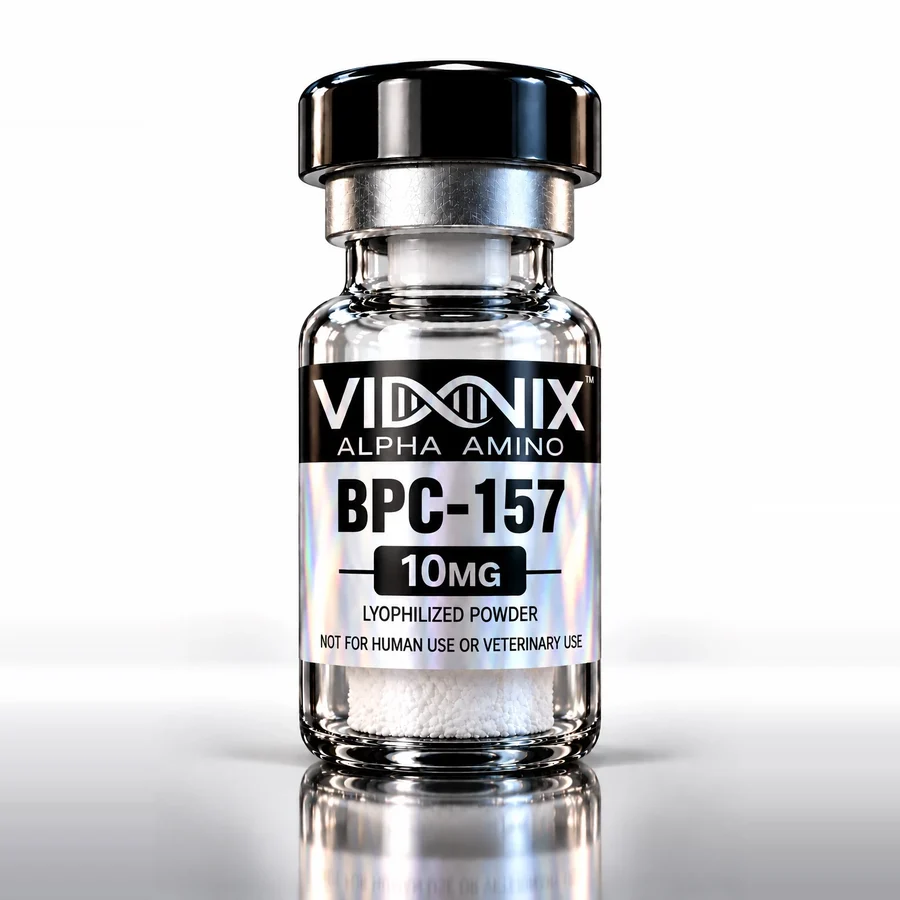
They differ in origin, size, sequence and the biology researchers have tied to them. BPC-157 is a 15-residue fragment of a protein its discoverers called body protection compound. TB-500 is a much shorter synthetic peptide built around the actin-binding region of thymosin beta-4, a protein found in nearly every cell.
| Property | BPC-157 | TB-500 |
|---|---|---|
| Source protein | Body protection compound, described in human gastric juice | Thymosin beta-4 (43 residues) |
| Length | 15 amino acids | 7 amino acids (as Ac-LKKTETQ) |
| Sequence | GEPPPGKPADDAGLV | Ac-LKKTETQ |
| Molecular weight | 1419.5 g/mol | 889.0 g/mol |
| End groups | Free N- and C-termini | Acetylated N-terminus |
| Main research themes | Gastrointestinal, tendon and vascular models; NO system | Actin binding, cell migration, angiogenesis assays |
| Main research group | Largely University of Zagreb | Spread across thymosin beta-4 groups; few studies on the fragment itself |
| WADA 2026 section | S0 Non-approved substances | S2.3 Growth factors |
The comparison has a catch on the TB-500 side. Most published thymosin beta-4 work used the full 43-residue protein, not the 7-residue fragment sold under the TB-500 name. When articles credit TB-500 with findings, they are often borrowing results from the parent protein.
Where does BPC-157 come from and what is its structure?
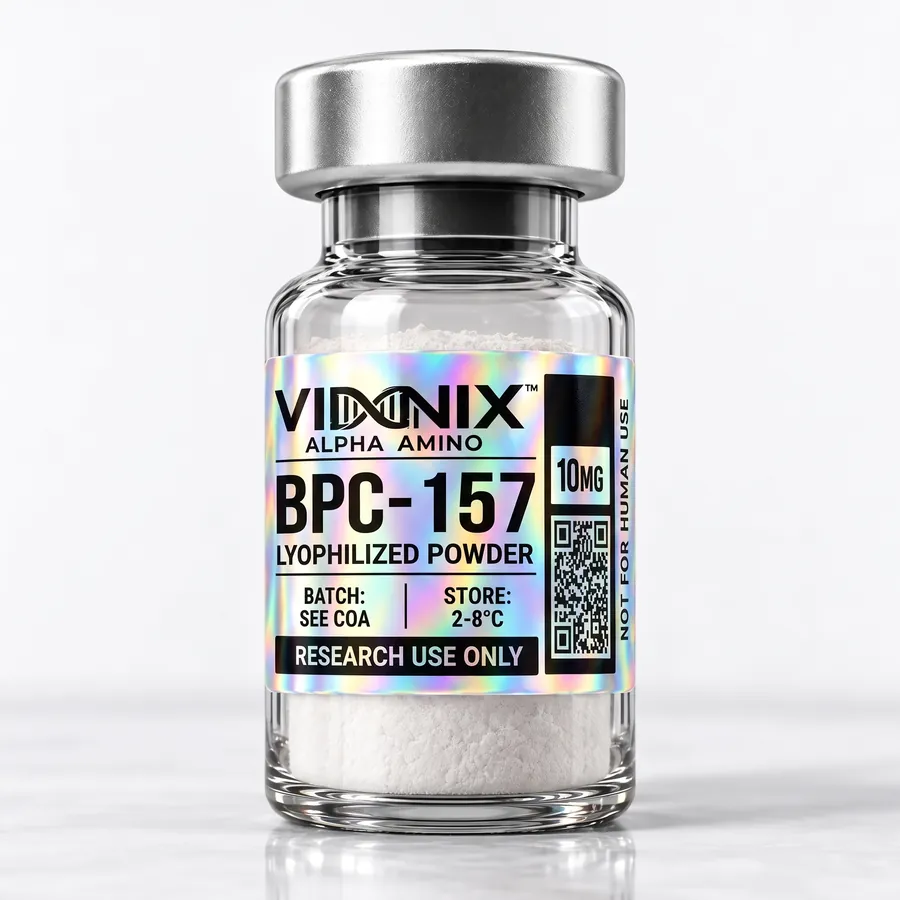
BPC-157 came out of work by Predrag Sikiric and colleagues in Zagreb in the early 1990s. They described a larger protein in gastric juice and synthesized a 15-residue partial sequence, which they call a stable gastric pentadecapeptide [1]. The full parent protein has not been characterized in the way thymosin beta-4 has, so BPC-157 is best treated as a defined synthetic peptide rather than a known natural fragment.
The sequence is GEPPPGKPADDAGLV. Three prolines near the N-terminus and the acidic aspartate pair give it a fairly rigid, hydrophilic character. Its molecular formula is C62H98N16O22, with a molecular weight of about 1419.5 g/mol. If you need a refresher on reading sequences like this, see understanding peptide sequences.
What is TB-500 and how does it relate to thymosin beta-4?
Thymosin beta-4 is a 43-residue, N-acetylated protein originally isolated from calf thymus [3]. In 1991 it turned out to be the main actin-sequestering peptide in platelets, binding actin monomers one to one and holding them out of filaments [2]. Its central actin-binding motif, LKKTETQ at residues 17 to 23, became the focus of efforts to map which parts of the protein did what [3].
TB-500 began as a commercial name, not a registry name. When the Ghent doping control laboratory analyzed a product sold as TB-500 in 2012, they identified the N-terminally acetylated 17 to 23 fragment, Ac-LKKTETQ, and synthesized it as a reference [4]. That definition is now the common one, with a molecular weight of about 889.0 g/mol. Some suppliers still use the name for full-length thymosin beta-4, which weighs about 4963 g/mol, so the product record and the mass spectrum matter more than the label.
What did preclinical studies examine for each peptide?
BPC-157
Most BPC-157 studies were rodent experiments from the Zagreb group. They examined models of gastric and intestinal lesions, and later tendon, ligament, muscle and bone injury, and reported better structural and biomechanical scores in treated animals than in controls [1][6]. A 2025 systematic review screened 544 records and kept 36 studies on musculoskeletal outcomes, mechanism and safety: 35 were preclinical and 1 was clinical [6].
Independent cell work exists but is thin. Chang and colleagues in Taiwan cultured rat Achilles tendon fibroblasts and reported more explant outgrowth, better survival under hydrogen peroxide stress and more migration in BPC-157-treated cells, without a direct change in proliferation [7].
TB-500 and thymosin beta-4
For thymosin beta-4, the core findings were biochemical: actin sequestration in vitro [2]. Later work tied separate short regions of the protein to separate activities in cell and animal models, with the LKKTETQ region linked to cell migration and blood vessel formation in assays [3]. Very little has been published on Ac-LKKTETQ itself as a test article; most of its literature is analytical, written by doping control labs [4].
What mechanisms have been proposed for each?
The proposed mechanisms do not overlap much, which is part of why the two peptides get compared at all.
- BPC-157: the originating group has argued for effects on the nitric oxide system and on angiogenesis, describing the peptide as modulating both in rodent models [1]. Chang's cell data pointed to activation of the FAK and paxillin focal adhesion pathway in tendon fibroblasts [7]. The 2025 review also summarized reports of increased growth hormone receptor expression in cultured fibroblasts [6].
- Thymosin beta-4 and its fragment: the mechanism with the strongest biochemical support is binding of G-actin, which controls the pool of actin available for filament assembly [2]. Effects on migration and vessel formation were attributed to the actin-binding region in reviews of the protein's active sites [3].
Treat these as hypotheses drawn from preclinical data. Neither peptide has a receptor or target confirmed to the standard expected of an approved drug.
How do stability and handling differ in the lab?
BPC-157 is described by its originators as stable in human gastric juice, which is unusual for an unmodified peptide and is the reason for the "stable gastric pentadecapeptide" label [1]. That claim concerns the acidic, enzyme-rich gastric environment. In rodent pharmacokinetic work summarized in the 2025 review, its half-life was under 30 minutes, with hepatic metabolism and renal clearance [6].
Ac-LKKTETQ is shorter, carries two lysines and an acetyl cap, and is very water soluble. The acetyl group removes the free N-terminal amine, which is one less site for aminopeptidases, though no stability data on the fragment in biological matrices reached our reference list beyond doping control work.
On the bench, both are usually supplied as lyophilized powders and handled the same way: keep sealed vials cold, dry and dark, let them reach room temperature before opening so moisture does not condense inside, and avoid repeated freeze-thaw cycles once a solution is made. Our peptide storage page goes through this in more detail.
Why are BPC-157 and TB-500 often paired in research blends?
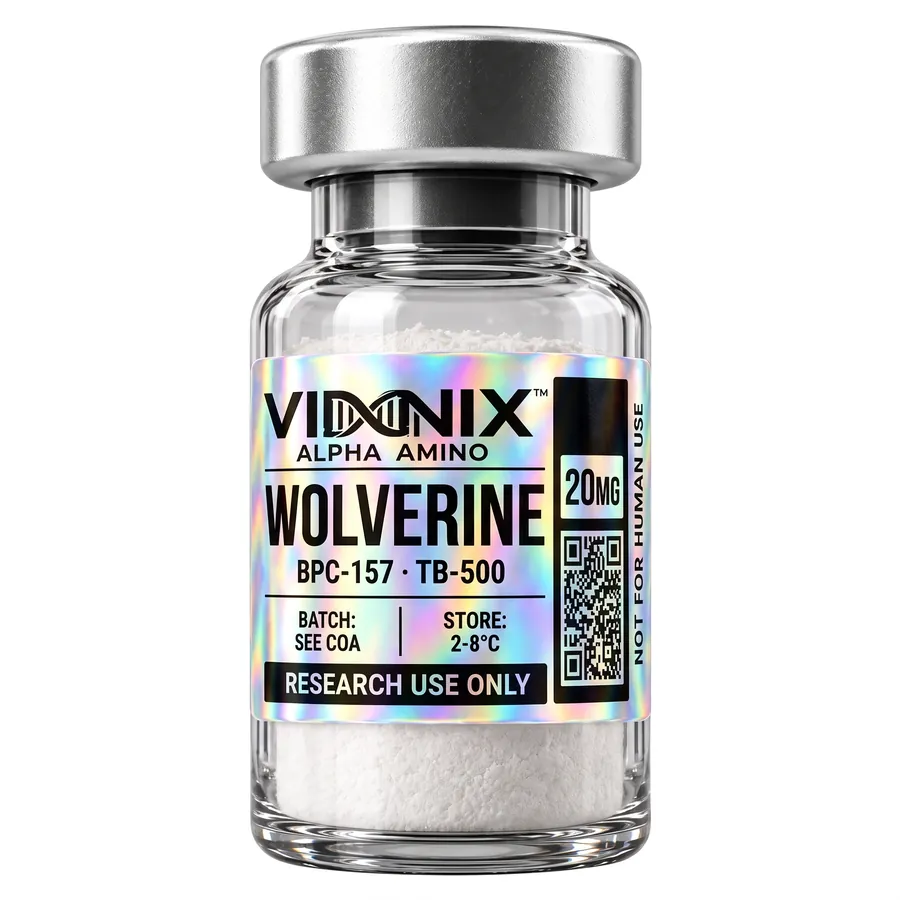
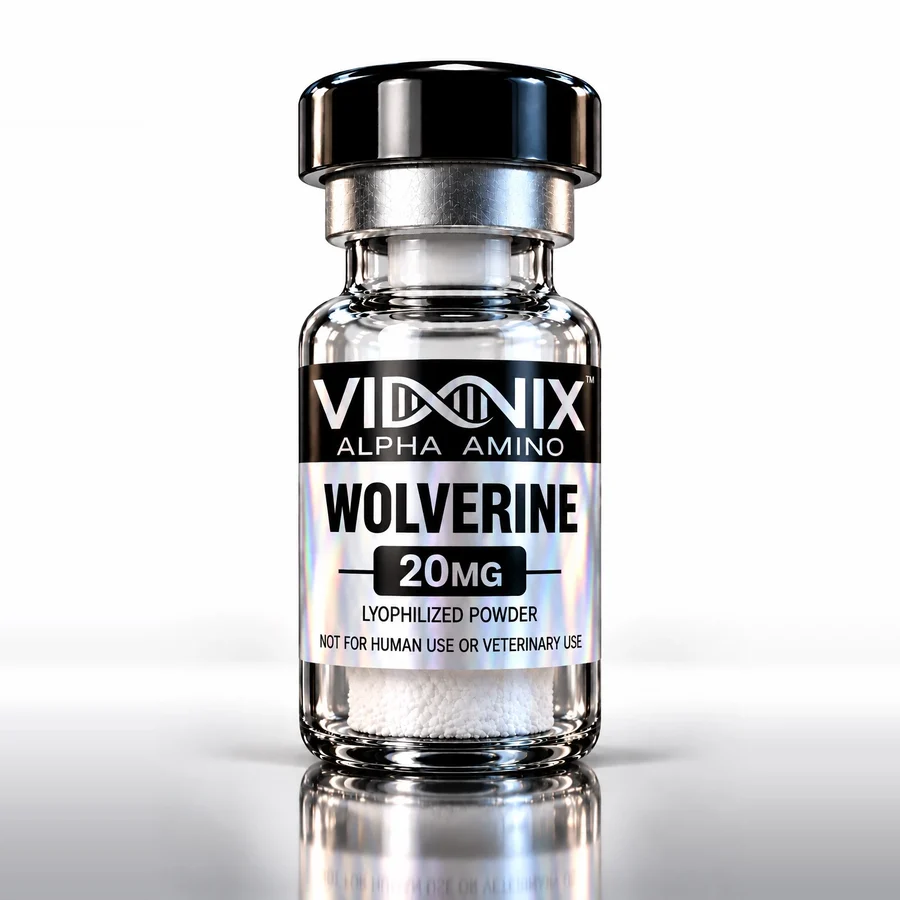
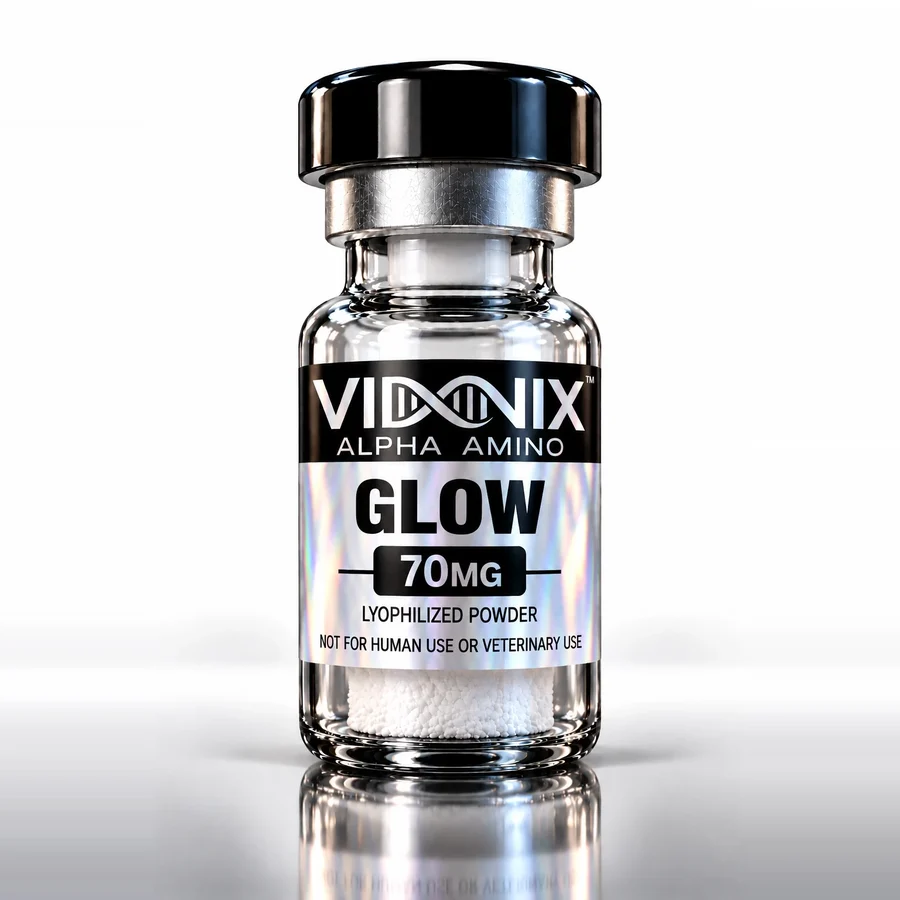
The usual reasoning is that the two peptides were studied through different proposed mechanisms, so a blend lets a lab look at both in one test article. That is the logic behind the Wolverine Blend (BPC-157 and TB-500) and the GLOW Blend, which adds GHK-Cu.
Blends have a methodological cost. If a combination gives a result, you cannot assign it to either component without single-peptide arms run alongside. Only one controlled study of the pair turned up in our PubMed search. In a 2026 rat Achilles tendon repair model with four groups of eight (control, BPC-157, TB-500 and both), the TB-500 group showed the only significant gain in load to failure at four weeks, and the combination did not outperform either peptide alone [5]. The authors called it exploratory, and they described their TB-500 as synthetic thymosin beta-4, which shows again why the exact sequence needs stating.
For any blend, ask the supplier how each component's identity was confirmed. Mass spectrometry should show both expected masses, about 1419.5 and 889.0 g/mol for these two peptides.
Are BPC-157 and TB-500 banned by WADA?
Yes, both appear on the 2026 World Anti-Doping Agency Prohibited List, which took effect on 1 January 2026 [8]. They sit in different sections.
- BPC-157 is named in S0, Non-approved substances: any pharmacological substance with no current approval by a government health authority for human therapeutic use. S0 substances are prohibited at all times, in and out of competition.
- TB-500 falls under S2.3, Growth factors and growth factor modulators, which lists "thymosin-beta-4 and its derivatives e.g. TB-500".
Doping control labs have published LC-MS methods for detecting the TB-500 fragment in plasma and urine since 2012 [4]. The 2025 orthopaedic review also noted that BPC-157 was banned in professional sport even as interest in it grew [6].
How strong is the evidence, and what should a study plan account for?
The evidence for both peptides is early stage. For BPC-157, the 2025 systematic review found 35 preclinical studies and one retrospective clinical report, and no clinical safety data [6]. A large share of the preclinical work comes from a single research group, which makes independent replication the main gap. For TB-500 as Ac-LKKTETQ, there is almost no published work on the fragment as a test article; the stronger literature is on full-length thymosin beta-4.
If you are planning a comparison in cell or tissue models, a few design points carry most of the weight:
- Confirm identity by mass for every lot, and confirm which TB-500 you have: the 7-residue fragment or full-length thymosin beta-4. See how to read a COA.
- Run each peptide alone before any blend, with a vehicle control and a scrambled-sequence control if you can source one.
- Match conditions by molar concentration, not mass, since the molecular weights differ by a factor of about 1.6.
- Record lot numbers, storage history and solution age in the notebook, so results can be traced if a lot behaves differently.
FAQFrequently asked questions
Is TB-500 the same as thymosin beta-4?
Not usually. Thymosin beta-4 is a 43-residue protein. TB-500 most often refers to the acetylated fragment Ac-LKKTETQ, residues 17 to 23, though some suppliers use the name for the full protein. Check the sequence on the product record.
Which is bigger, BPC-157 or TB-500?
BPC-157 has 15 residues and a molecular weight of about 1419.5 g/mol. TB-500 as Ac-LKKTETQ has 7 residues and weighs about 889.0 g/mol.
Have BPC-157 or TB-500 been tested in human clinical trials?
Not in published controlled trials. The 2025 BPC-157 systematic review found one retrospective clinical report among 36 studies, and no published controlled human trials of the TB-500 fragment turned up in our search.
Is BPC-157 a natural peptide?
It is a synthetic peptide based on a partial sequence of a protein described in gastric juice. The parent protein has not been characterized in the same detail as thymosin beta-4.
Are BPC-157 and TB-500 FDA approved?
No. Neither is approved by the FDA for any use in people or animals. Both are sold as research reagents for laboratory use only.
REFScientific references
-
Sikiric P, Seiwerth S, Skrtic A, et al. Stable Gastric Pentadecapeptide BPC 157 as a Therapy and Safety Key: A Special Beneficial Pleiotropic Effect Controlling and Modulating Angiogenesis and the NO-System. Pharmaceuticals (Basel). 2025;18(6):928. PubMed 40573323
review (originating research group) -
Safer D, Elzinga M, Nachmias VT. Thymosin beta 4 and Fx, an actin-sequestering peptide, are indistinguishable. J Biol Chem. 1991;266(7):4029-4032. PubMed 1999398
in vitro (biochemistry) -
Sosne G, Qiu P, Goldstein AL, Wheater M. Biological activities of thymosin beta4 defined by active sites in short peptide sequences. FASEB J. 2010;24(7):2144-2151. PubMed 20179146
review -
Esposito S, Deventer K, Goeman J, Van der Eycken J, Van Eenoo P. Synthesis and characterization of the N-terminal acetylated 17-23 fragment of thymosin beta 4 identified in TB-500, a product suspected to possess doping potential. Drug Test Anal. 2012;4(9):733-738. PubMed 22962027
analytical chemistry -
Bicer O, Adanir O, Guleryuz Y, et al. Effects of BPC-157 and TB-500 on Achilles tendon healing in rats: A histopathological and biomechanical study. Jt Dis Relat Surg. 2026;37(3):822-837. PubMed 42542926
animal study (rat, n=32) -
Vasireddi N, Hahamyan H, Salata MJ, et al. Emerging Use of BPC-157 in Orthopaedic Sports Medicine: A Systematic Review. HSS J. 2025;21(4):485-495. PubMed 40756949
systematic review -
Chang CH, Tsai WC, Lin MS, Hsu YH, Pang JH. The promoting effect of pentadecapeptide BPC 157 on tendon healing involves tendon outgrowth, cell survival, and cell migration. J Appl Physiol (1985). 2011;110(3):774-780. PubMed 21030672
in vitro / ex vivo study -
World Anti-Doping Agency. World Anti-Doping Code International Standard: Prohibited List 2026. Valid 1 January 2026. Source
regulation (anti-doping)
 Blog
 Peptides
 Compound Library
 Research Blend
 Research Blend
 Testing & Analysis