
GHK-Cu Explained: The Chemistry Behind the Copper Peptide
A bench-level look at GHK-Cu: where the tripeptide was found, how it holds copper, why the solution is blue, what the research looked at and how to handle it.
Research Peptides in Northern Virginia: Same and Next Day
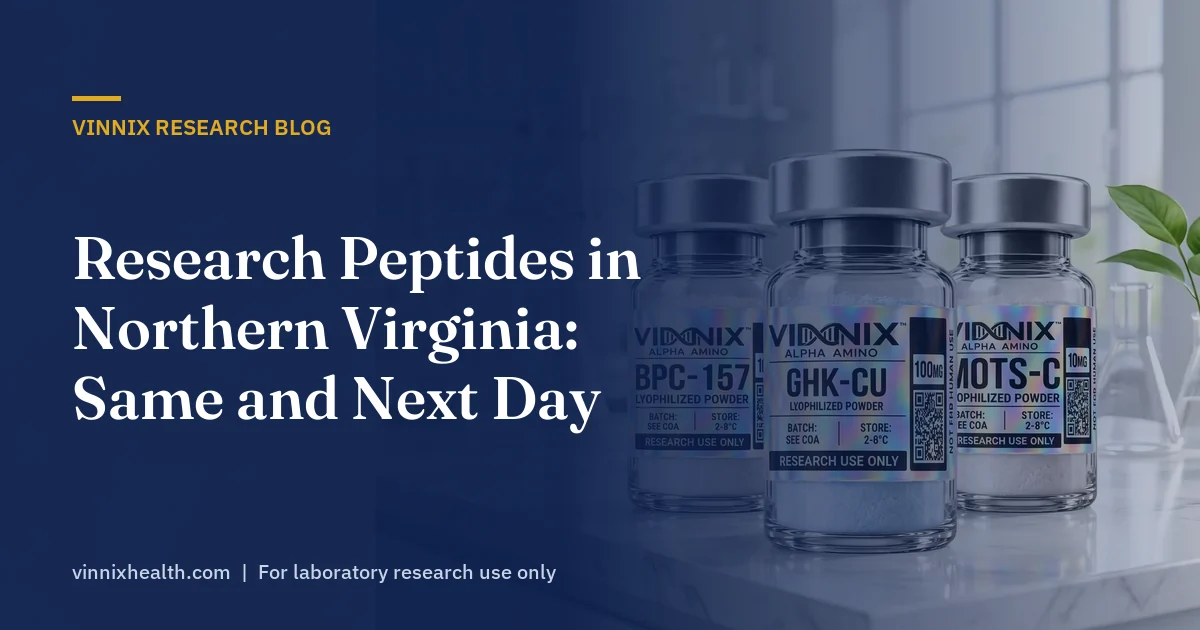
Where Vinnix delivers locally, what it costs, the 2pm ET same day cutoff, how ordering and payment work, and what to do with the vials when they arrive.
MOTS-c vs SS-31: Two Mitochondria-Targeting Peptides
One is encoded by mitochondrial DNA, the other was designed in a lab to sit on the inner membrane. How MOTS-c and SS-31 differ, and what the research actually covered.
Selank vs Semax: Two Russian-Developed Research Peptides
Selank and Semax are seven-residue peptides built on the same design idea from two different parent molecules. Here is how their structures, research and handling compare.
Peptide Blends Explained: GLOW, KLOW and Wolverine Compared
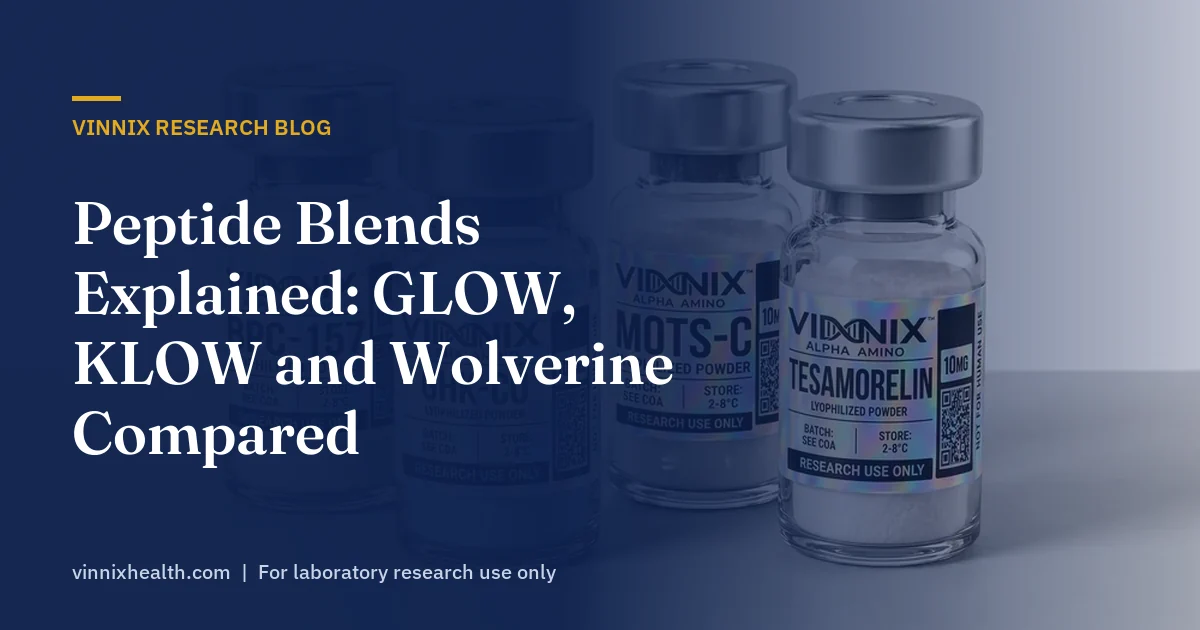
GLOW, KLOW and Wolverine are catalog names for vials that hold two to four separate peptides. Here is what each contains, how blends are tested and where they fall short.
How to Spot Fake or Underfilled Research Peptides Before You Buy
Independent labs keep finding online products that are mislabeled, underfilled or contaminated. This checklist covers the warning signs to look for before an order.
Bacteriostatic Water vs Sterile Water: Differences for Lab Use
One contains 0.9% benzyl alcohol and one contains nothing at all. Here is how that difference decides single-use vs multi-use, compatibility and bench handling.
BPC-157 vs TB-500: How Researchers Compare the Two Peptides
Two short peptides, two very different origins. A side by side look at BPC-157 and TB-500: structure, the preclinical work behind each, handling, blends and anti-doping status.
NAD+ in the Lab: What Researchers Measure and Why
What NAD+ does in the cell, which enzymes consume it, how labs measure it by enzymatic cycling and LC-MS, and how to keep it intact at the bench.